.webp)








Steel Cadence: A Technical Manual for Pilot Mastery in Mecha Break
The mecha genre has entered a new era with Mecha Break, a title that successfully bridges the gap between the high-speed kineticism of Armored Core and the team-based tactical depth of hero shooters. Unlike generic robotic combat games, Mecha Break operates on a rigorous system of energy management, ballistic trajectory physics, and structural weight distribution. To pilot at a competitive level, one must move beyond the spectacle of laser beams and explosions to master the "Internal Combustion" of the game's mechanics. This guide serves as a deep technical dive into the strategies required to dominate the 6v6 arenas and the expansive "Mashmak" battlegrounds, focusing on the granular details that separate a rookie pilot from an Ace.
1. The Energy Economy: Mastering the EN Gauge and Overdrive
Every maneuver in Mecha Break, from high-speed dashing to aerial hovering, is governed by the EN (Energy) gauge. The most fundamental error new pilots make is treating the dash button as a binary toggle rather than a precision instrument. In high-level play, the goal is "EN Neutrality." This involves "Feathering" your thrusters—briefly releasing the dash input mid-flight to allow for micro-recharges without losing forward momentum. If you redline your energy (entering a "Depleted" state), you become a stationary target for several seconds, which is a death sentence in a high-velocity skirmish.
Understanding the "Overdrive" or "Awakening" state is equally critical. This temporary boost increases EN recovery rates and reduces weapon reload times. However, the technical secret lies in the "Overdrive-Cancel." By activating your Overdrive the moment a dash ends, you instantly refresh your EN bar, allowing for a "Double-Flight" sequence that can traverse the entire length of the "Marshy Bayou" map. Use this to catch fleeing scouts or to escape a localized ultimate that would otherwise be unavoidable.
2. Ballistic Trajectories and Hitscan Management
Weapons in Mecha Break are divided into projectile-based ballistics and instant-effect hitscan lasers. Projectile weapons, such as the heavy autocannons of the Falcon class, require "Lead Targeting." Because mechs move at speeds exceeding 300 km/h, you cannot aim where the enemy is; you must aim where their momentum will carry them in 0.5 seconds. This involves tracking the enemy’s "Thruster Flare"—if their flares are pointing left, they are about to strafe right.
Weapon Archetype Optimization
- Solid Shells: High impact and "Stagger" value. Use these to break the enemy’s stability before closing in for a melee strike.
- Energy Beams: Instant travel time but high EN cost. These are "Finisher" weapons, best used when an enemy's shields are already compromised.
- Missile Volleys: These require a "Lock-On" duration. Advanced pilots use "Multi-Lock" to force enemies into defensive maneuvers, wasting their EN on dodges while the pilot readies a high-accuracy primary shot.
3. The Art of the Perfect Parry: Melee Combat Mechanics
Melee combat in Mecha Break is not just about swinging a beam saber; it is a high-stakes game of "Collision Physics." When two mechs initiate a melee strike simultaneously, they enter a "Clash" state. Success here depends on your mech's "Impact Force" stat. However, the most powerful defensive tool is the Shield Parry. By raising your shield exactly 0.2 seconds before a melee hit connects, you trigger a "Counter-Stun," leaving the attacker vulnerable to a point-blank execution.
Melee Combo Routing
- Stun-Lock Initiation: Start with a sub-weapon stagger or a dash-kick.
- The Primary String: Execute two hits of your melee weapon, but "Animation Cancel" the third hit by switching to a secondary shotgun or pistol.
- The Follow-Up: Use the momentum of the weapon swap to dash-cancel behind the opponent, initiating a second melee string from their blind spot. This "Looping" technique is the only way to bypass the high armor of Heavy-type mechs.
4. Class Synergies: Building the Unstoppable Wing
Victory in Mecha Break is rarely achieved through solo heroics; it is won through "Loadout Complementarity." The roster is categorized into Attack, Brawler, Sniper, and Support. A common technical mistake is running a team with too many Attack-types. A balanced wing should utilize the "Hammer and Anvil" strategy. The Tricera (Heavy Tank) acts as the anvil, soaking up damage and anchoring the objective, while the Alys (Speedster) acts as the hammer, flanking the enemy's rear-line snipers.
High-Level Team Compositions
- The Blitzkrieg: 3 Speedsters, 1 Support, 2 Attackers. Focuses on "Rapid Decapitation" of the enemy support.
- The Iron Wall: 2 Heavies, 2 Supports, 2 Snipers. Utilizes "Stationary Firepower" to force the enemy into a war of attrition.
- The Disruptor: Focusing on mechs with Electronic Warfare (EW) capabilities to jam enemy radars and HUDs, rendering their long-range missiles useless.
5. Structural Integrity: Managing Armor and Parts Damage
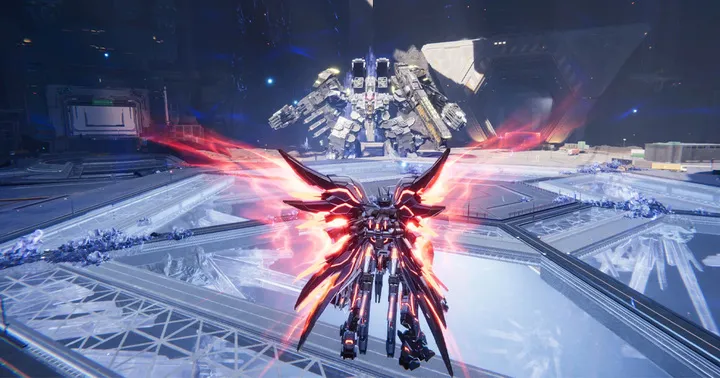
Mecha Break features a "Location-Based Damage" system. It is not just about the total HP pool; it is about the "Parts HP." If your mech’s legs take too much damage, your dash speed is halved. If your weapon arm is damaged, your accuracy bloom increases significantly. Technical pilots use "Angular Defense"—turning their mech so that incoming fire hits the "Armored Shielding" on their shoulders rather than their fragile "Core" or "Head" sensors.
Repair and Sustainability
In the "Mashmak" mode, the map is littered with repair stations. However, the deep strategy is "Component Rotation." If your primary weapon arm is at 10% HP, switch your active weapon to the off-hand. This preserves your primary weapon's functionality for the final encounter. Additionally, utilize the "Emergency Purge" ability to shed damaged armor plates in exchange for a temporary speed boost, a tactic that often confuses enemies who are expecting a slow-moving, crippled target.
6. Electronic Warfare (EW): Dominating the Information Layer
Modern mecha combat is as much about data as it is about fire-power. The "Lock-On" mechanic is the core of most engagement ranges. However, mechs equipped with "Chaff Dispensers" or "Radar Jamming" can break these locks. Deep-level play involves "Ghosting"—using a jamming ability just as you enter a cloud of dust or debris. This removes your icon from the enemy’s HUD, allowing you to perform a "Silent Flank" even in the middle of a chaotic firefight.
Tactical HUD Usage
- IFF Tracking: Identify "Identify Friend or Foe" markers. High-level pilots look for "Isolated Markers," targeting enemies who have strayed too far from their support’s healing radius.
- Heat Map Monitoring: The HUD tracks weapon heat. If you see your opponent’s heat bar in the red, they are "Overheated" and cannot fire for 2 seconds. This is your "Green Light" to push aggressively.
- Signal Dampening: Some mechs can reduce their "Sensor Footprint," allowing them to get closer to snipers before being spotted.
7. Verticality and Map Geometry Exploitation
The maps in Mecha Break are designed with extreme verticality. Being "Above" your opponent provides a 15% increase to projectile gravity-acceleration and a massive advantage in "LOS" (Line of Sight). Advanced pilots use "Sky-Hooking"—using grappling hooks or vertical thrusters to anchor themselves to the side of a skyscraper, raining down fire while staying out of the effective range of ground-based shotguns.
Exploiting the Environment
- Thermal Currents: Certain maps have volcanic vents or fans that provide "Zero-EN" vertical lift. Using these preserves your energy for offensive dashes.
- Crumbling Cover: Buildings in Mecha Break are destructible. Do not hide behind a pillar if a Heavy mech is aiming a railgun at you; the railgun will penetrate the pillar and kill you. Instead, use "Hard Terrain" like mountains or underground tunnels.
- Shadow Kiting: Staying in the shadow of large structures makes it harder for enemies to see your thruster flares, giving you a split-second advantage in visual acquisition.
8. Customization for Performance: Tuning the Frame
The "Paint Shop" is for aesthetics, but the "tuning" menu is for winners. Every mech can be adjusted in terms of weight distribution and "Sub-Processor" slots. If you find your mech is too sluggish, you must sacrifice armor plating for "Lightweight Actuators." This increases your "Turn Speed"—the most underrated stat in the game. A mech that can turn 20% faster will always win a close-range "Circle-Strafing" duel.
Tuning Priorities by Class
- Snipers: Prioritize "Muzzle Velocity" and "Cooling Systems" to reduce the time between high-power shots.
- Brawlers: Focus on "Impact Resistance" and "Melee Attack Speed" to dominate the Clash mechanic.
- Support: Invest in "Signal Range" and "Shield Recharge Rate" to keep your team’s HUDs clear and their defenses active.
9. The Mashmak Meta: Macro-Strategy for Large-Scale War
In the 60-player Mashmak mode, the game shifts from a tactical shooter to a "Battle Royale" with objectives. The key here is "Resource Conservation." Do not take every fight you see. Instead, track the "Supply Drops" and "Boss Mechs." Killing a Boss Mech provides "Core Fragments" that can upgrade your mech mid-match, turning a standard frame into an "Alpha-Class" juggernaut.
Macro-Tactics Checklist
- Zone Control: Stay near the edge of the collapsing zone to catch stragglers, but ensure your "Flight Path" to the center is clear of high-level AI defenses.
- Scavenging: Loot fallen mechs for "Weapon Modules." A standard rifle can be upgraded into a "Dual-Phase" rifle if you find the right parts on the battlefield.
- Team Regrouping: In the final circle, "Mech Integrity" is more important than kills. If your team is damaged, hide and use "Nanite Repair Kits" before the final engagement.
10. Frame-Perfect Evasion: The Pulse Dodge
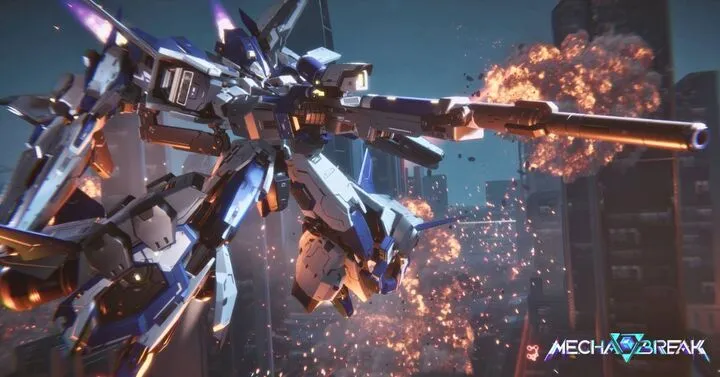
The highest level of pilot skill is the "Pulse Dodge." Every mech has a "Perfect Dodge" window. If you dash exactly as a projectile enters your proximity alarm, you perform a Pulse Dodge, which grants 0.5 seconds of invulnerability and resets your weapon's "Burst Cooldown." This allows you to "Flick-Shot" an enemy while dodging their own attack. This is the ultimate skill check that separates the top-tier pilots in the Ranked ladder.
Conclusion
Mecha Break is a game of high-speed chess played with multi-ton machines of war. It demands a level of cognitive load that few shooters can match, requiring the player to manage energy, ballistics, structural integrity, and electronic data simultaneously. By mastering the nuances of EN feathering, part-damage management, and class-based synergies, you transform your mech from a clumsy robot into a precise extension of your own will. Whether you are anchoring an objective in a Heavy frame or dancing through a hail of missiles in a Speedster, remember: the pilot’s mind is the most powerful component of the machine. Strap in, check your EN levels, and prepare for sortie.