
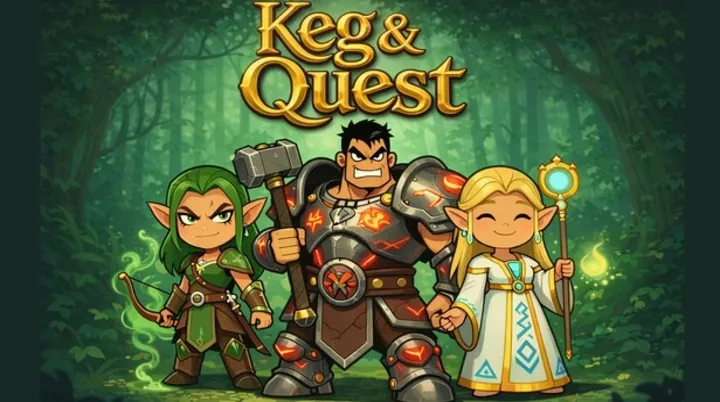
Among the many free-to-play RPG titles released in recent years, Keg & Quest distinguishes itself through its emphasis on long-term progression, strategic development, and asynchronous multiplayer interaction rather than twitch-based combat or action-heavy gameplay. While many RPGs compete through spectacle, Keg & Quest instead leans into something more psychologically compelling: the satisfaction of constant incremental advancement.
This progression-focused design philosophy is not merely a gameplay feature—it is the core identity of the game. Beneath its colorful fantasy presentation lies a carefully structured reward system that keeps players invested through compounding upgrades, timed rewards, equipment scaling, and layered progression loops. Rather than existing as a passive mechanic, progression in Keg & Quest becomes the emotional and structural backbone of the player experience.
This article explores one specific aspect of the game in depth: the design and psychological architecture of Keg & Quest’s long-term progression systems. Instead of offering general tips or beginner advice, this analysis examines how the title structures advancement, motivation, pacing, and retention through its idle RPG mechanics.
1. The Foundation of Idle Progression in Keg & Quest
The Role of Passive Advancement
Keg & Quest identifies itself as an idle RPG, meaning that player growth continues through time-based systems rather than requiring nonstop manual input. This foundational structure changes the relationship between player and game dramatically. In traditional RPGs, progress is tied directly to active time spent grinding, questing, or fighting. In idle RPGs, however, progress is tied to both time and strategic preparation.
This creates a fundamentally different emotional rhythm. Players are no longer rewarded simply for mechanical skill or constant engagement—they are rewarded for planning, optimization, and patience. Logging off no longer feels like abandoning progress; instead, it becomes part of the progression loop itself.
Time as a Resource
In Keg & Quest, time functions like an invisible currency. Every minute offline potentially contributes toward progression, rewards, or resource accumulation. This transforms waiting into a mechanic rather than a limitation, making patience itself part of the strategic experience.
2. Incremental Growth and the Satisfaction Curve
The Power of Small Numbers Becoming Big Numbers
One of the strongest hooks in idle RPG design is incremental escalation. Keg & Quest’s promise of upgrading heroes and collecting increasingly powerful gear suggests a progression model built around exponential stat growth. Players begin with weak capabilities, but over time transform into dramatically stronger versions of themselves.
This is psychologically rewarding because players constantly feel measurable improvement. Even small stat boosts feel meaningful when compounded over dozens or hundreds of upgrades. The repeated cycle of “slightly stronger than before” creates addictive momentum.
Visible Progress Reinforces Retention
- Damage numbers increase over time
- Gear upgrades improve visible power
- Enemy difficulty scales upward
- Progress milestones unlock faster advancement
These visible indicators reassure players that every session matters.
3. Strategic Planning Over Mechanical Skill
A Different Kind of Mastery
Keg & Quest emphasizes strategy over reflexes, a deliberate design decision. Unlike action RPGs where mastery means fast reactions and precise inputs, mastery here comes from preparation and efficient build planning.
This attracts a different type of player—those who enjoy optimization, spreadsheets, theorycrafting, and long-term planning rather than fast-paced combat execution.
The Appeal of Optimization
Optimization-based games create satisfaction through intellectual decision-making:
- Choosing ideal upgrade paths
- Balancing offense vs defense
- Managing resource allocation
- Timing progression resets or reinvestments
4. Equipment Scaling as a Core Motivator
Loot as a Progression Language
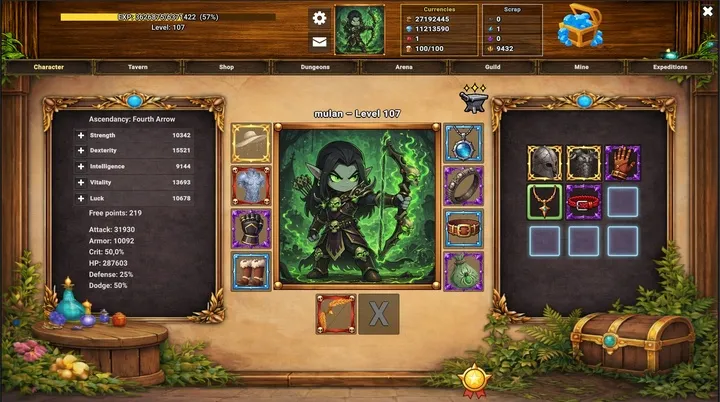
Gear collection is central to Keg & Quest’s progression identity. Equipment in RPGs does more than increase stats—it visually and mechanically symbolizes advancement.
Every stronger weapon, armor piece, or accessory communicates a narrative of growth. Better loot means visible proof that the character has evolved.
Why Loot Systems Never Lose Appeal
Loot remains compelling because it creates uncertainty and anticipation:
- Players chase the next rarity tier
- Randomized rewards create excitement
- Build experimentation becomes possible
- Inventory comparison creates strategic depth
5. PvP and Competitive Validation
Progression Gains Meaning Through Comparison
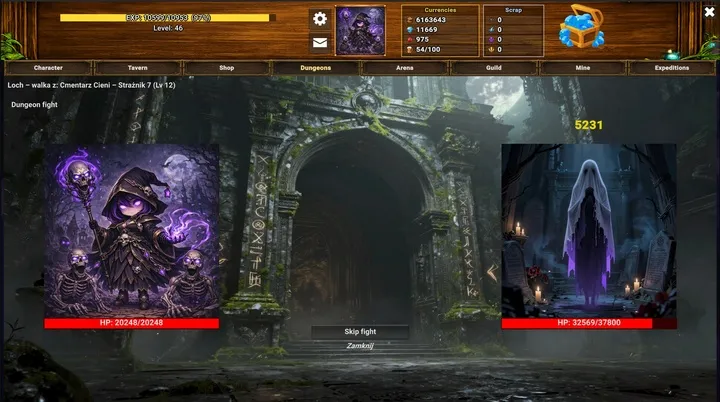
Keg & Quest includes PvP competition and rankings. This transforms progression from private satisfaction into public validation.
Without comparison, stat growth is self-contained. With PvP, every upgrade matters because it improves standing against real opponents.
Social Benchmarking
Competitive systems motivate players by creating benchmarks:
- Rankings provide measurable prestige
- Defeating stronger players validates builds
- Losing reveals progression weaknesses
- Leaderboards create aspirational goals
6. Guild Systems and Collective Progression
Community as Motivation
Guild participation adds another progression layer by making advancement socially relevant. Keg & Quest allows players to join guilds and cooperate.
Now progression matters not only for individual success but for team contribution. Stronger characters help guildmates succeed in shared events.
Shared Responsibility Enhances Retention
Players stay active longer when others depend on them:
- Guild expectations create accountability
- Social bonds increase attachment
- Contribution becomes rewarding
- Shared victories feel more meaningful
7. World Bosses and Macro-Scale Progression
Large-Scale Cooperative Challenges
World boss events provide endgame-style progression tests. These encounters serve as milestones for players to measure overall account strength.
Unlike small battles, world bosses represent cumulative power checks that demand preparation, teamwork, and efficient builds.
The Spectacle of Shared Difficulty
World bosses enhance progression by:
- Testing maximum output potential
- Rewarding preparation over randomness
- Providing rare rewards
- Creating memorable social moments
8. Reward Timing and Behavioral Reinforcement
The Science of Timed Rewards
Idle RPGs thrive because they carefully time reward intervals. Keg & Quest offers regular rewards and time-based progression.
These intervals create habitual play patterns, encouraging players to check in repeatedly.
The Check-In Loop
- Log in
- Collect rewards
- Spend resources
- Upgrade power
- Set new timers
- Repeat later
9. The Emotional Loop of Constant Improvement
Progression as Emotional Comfort
Games like Keg & Quest succeed because progression creates emotional reassurance. Players always feel like something productive happened, even during brief sessions.
This reliability is comforting compared to high-pressure competitive games where effort may produce failure instead of reward.
Predictability Creates Satisfaction
Unlike skill-based games:
- Effort almost always yields progress
- Losses rarely erase advancement
- Every session feels worthwhile
- Goals remain consistently achievable
10. Why Long-Term Progression Defines Keg & Quest’s Identity
Progression Is the Entire Experience
For Keg & Quest, progression is not merely a supporting mechanic—it is the primary gameplay fantasy. The entire structure of upgrading heroes, building gear, competing in PvP, and joining guilds revolves around becoming steadily stronger over time.
Every mechanic feeds into that singular promise: you will always be stronger tomorrow than you are today if you continue investing in your build.
A Game About Momentum
Ultimately, Keg & Quest is less about isolated moments of gameplay and more about momentum itself. The thrill comes not from one battle or one reward, but from watching weeks of optimization transform a weak character into an elite competitor.
Conclusion
Keg & Quest stands out within the crowded RPG genre because it embraces progression as its central design philosophy rather than treating it as a secondary reward structure. Through idle mechanics, time-based advancement, gear scaling, PvP validation, guild cooperation, and strategic planning, the game builds a deeply layered system where player motivation is tied directly to constant measurable improvement. Rather than demanding reflexes or moment-to-moment mechanical mastery, it rewards patience, foresight, and optimization.
Its progression systems are effective because they tap into one of gaming’s most powerful psychological motivators: the satisfaction of becoming stronger over time. Every login, upgrade, reward, and victory reinforces the feeling that progress is always being made. In Keg & Quest, growth is not just part of the game—it is the reason the game exists.