.webp)







The world of Teyvat is a masterpiece of design, a sprawling tapestry of lore, music, and elemental combat that has captivated millions since its 2020 debut. Yet, beneath the veneer of its breathtaking landscapes and the allure of its gacha system, Genshin Impact faces a persistent, fundamental identity crisis. This is not a critique of its quality, but an examination of a structural paradox: the game is caught between its identity as a casual, accessible open-world adventure and the demands of its most dedicated player base for a challenging, repeatable endgame. This article explores the evolution of this conflict, the design philosophies at play, and why the "endgame" issue remains the most contentious subject in the game's history.
The Early Days: The Illusion of Difficulty
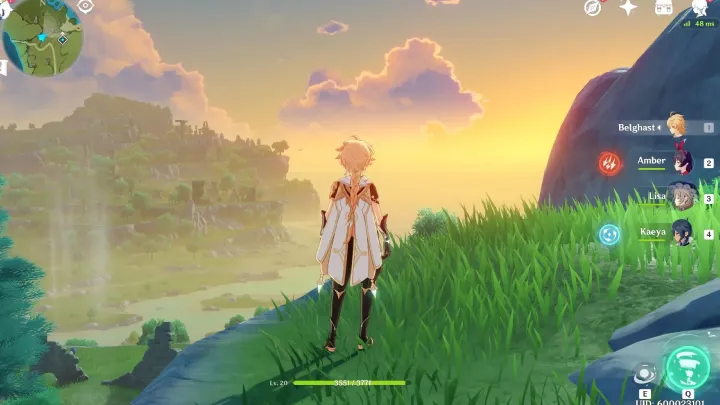
At launch, Genshin Impact felt like a different beast. Players were under-leveled, resources were scarce, and the Spiral Abyss—the game's primary timed combat challenge—felt genuinely insurmountable. For the first few months, the community was united by the struggle to simply survive the challenges of the open world and the early floors of the Abyss.
During this honeymoon phase, the lack of endgame content was masked by the sheer volume of discovery. Everything was new: the elemental reaction system was being deciphered, and the joy of exploring Mondstadt and Liyue provided enough engagement to satisfy even the most hardcore gamers. The "endgame" was simply the process of building your first competent team, a journey that felt rewarding and substantial.
The Power Creep and the Erosion of Challenge
As the game matured, the power level of characters began to scale exponentially. The introduction of characters like Raiden Shogun, Ayaka, and later, the Dendro reactions, shifted the meta significantly. Suddenly, content that once required precise rotations and careful team building could be trivialized by sheer damage output.
This power creep created a disconnect. While the game became easier for veterans, the developers, HoYoverse, maintained a design philosophy that prioritized accessibility. They wanted the game to be playable by everyone, regardless of skill level or time commitment. Consequently, the difficulty ceiling in the open world remained stagnant, leaving veteran players with no outlet to test their highly invested characters.
The Spiral Abyss: A Static Benchmark
The Spiral Abyss has long been the only true "hard" content in the game. However, it is a static, bi-weekly reset that has arguably become stale. For years, the community has begged for a permanent, challenging endgame mode—something akin to a roguelike dungeon or a survival mode—but the developers have remained hesitant.
The Problem with the Abyss
- Repetitiveness: Facing the same enemies every two weeks becomes a chore rather than a challenge.
- Lack of Variety: The Abyss rewards DPS checks above all else, often rendering defensive or utility-focused characters irrelevant.
- The "Meta" Trap: Because the Abyss is the only benchmark, the community focuses obsessively on "meta" units, stifling creativity and discouraging the use of niche characters.
The Design Philosophy: Accessibility vs. Depth
HoYoverse’s reluctance to introduce a permanent, high-difficulty endgame is rooted in a specific design philosophy. They have explicitly stated in developer interviews that they want to avoid creating "anxiety" among players. They fear that if they introduce a mode that is too difficult or requires too much time, casual players will feel excluded or pressured to spend money to keep up.
This approach is economically sound. Genshin Impact makes the vast majority of its revenue from casual players who log in for 20 minutes a day to explore and pull for characters they like. Alienating this demographic by forcing them into a "hardcore" grind would be a catastrophic business decision.
The "Imagination" Gap: Why Players Want More
Despite the business logic, the player base’s frustration is palpable. For many, the joy of Genshin Impact lies in the combat system. It is a deep, intricate system that allows for complex rotations and creative team building. When players spend months farming artifacts and leveling talents, they want a place to showcase that investment.
The Psychology of Investment
- The "Build" Payoff: Players spend hundreds of hours optimizing stats. Without a challenge, this optimization feels hollow.
- The Need for Mastery: Gamers naturally seek to master the systems they engage with. When the game doesn't provide a venue for that mastery, players feel the game is "wasted potential."
The Introduction of the Imaginarium Theater
In an attempt to bridge this gap, the developers introduced the "Imaginarium Theater." This was a significant departure from the Spiral Abyss, focusing on team building restrictions and character variety rather than pure DPS checks. It was an attempt to force players to use characters they might otherwise ignore.
However, the reception was mixed. While it encouraged variety, it also felt restrictive. For many, it didn't solve the core issue: the desire for an open-ended, high-skill combat challenge. It felt like a "puzzle" mode rather than a "combat" mode, further highlighting the divide between what the developers provide and what the hardcore community craves.
The Role of Events: Temporary Solutions
To keep the player base engaged, HoYoverse relies heavily on limited-time events. These events often feature unique mechanics, mini-games, and occasionally, combat challenges. While these are fun, they are fleeting. They do not provide a permanent sense of progression or a long-term goal for the endgame.
The "Event" Cycle
- The Hype: A new event is announced, promising unique rewards.
- The Engagement: Players participate for a week or two.
- The Void: The event ends, and players return to the daily grind of commissions and resin usage, feeling the lack of a permanent challenge once again.
The Cross-Platform Limitation
One often overlooked factor in this debate is the platform diversity. Genshin Impact is played on mobile devices, consoles, and PCs. Designing a high-difficulty endgame that is fair and accessible across all these platforms is a technical and design nightmare.
The Mobile Constraint
- Controls: Touchscreen controls are inherently less precise than mouse and keyboard or controllers.
- Hardware: Not all mobile devices can handle intense combat scenarios with complex visual effects without lagging.
- Accessibility: Any endgame content must be playable on a mid-range phone, which limits the complexity of the encounters the developers can create.
The Future: Can the Paradox Be Resolved?
Is there a middle ground? Perhaps the solution lies in optional, non-reward-based challenges. If the developers created a "Training Room" or a "Boss Rush" mode that offered no Primogems or exclusive rewards, but provided leaderboards or cosmetic achievements, it might satisfy the hardcore players without alienating the casuals.
This would allow the developers to maintain their "no anxiety" policy while acknowledging the skill ceiling of their combat system. It would transform the endgame from a mandatory chore into a playground for those who truly want to push the game’s mechanics to their absolute limit.
Conclusion: The Ongoing Evolution
Genshin Impact is a game that is constantly evolving, and the "endgame" issue is simply one facet of that growth. While the frustration of the veteran player base is valid, it is important to recognize that the game’s success is built on its broad appeal. The paradox of Teyvat is that it is both a deep combat simulator and a casual social space, and balancing these two identities is the greatest challenge the developers face. As the game continues to expand into new regions and introduce new mechanics, one can only hope that the developers find a way to honor the dedication of their most hardcore players without losing the magic that made the game a global phenomenon in the first place.
Summary: The article examines the "endgame" debate in Genshin Impact, analyzing the tension between casual accessibility and the desire for hardcore combat challenges.